Process Safety & Major Accident Hazard Management
BowTie Software for Risk Analysis & Critical Controls.
BowTie Easy runs 100% client-side in your browser: process safety diagrams and safeguard registers are never transmitted to external cloud servers. Grounded in CCPS LOPA criteria and ICMM Critical Control Management to withstand rigorous technical audits.
The Operational Problem
The Disconnect Between Static BowTie Drawings and In-Field Barrier Verification
In industrial process plants and mining sites, BowTie diagrams are frequently filed away as static slides after HAZID workshops, while day-to-day safeguard verification remains buried in disconnected spreadsheets.
Today: The Fragmented Approach
Static presentation slides and unversioned spreadsheets
- 01.Static PowerPoint or Visio diagrams that become obsolete the moment the risk workshop concludes.
- 02.Critical control registers tracked across duplicate spreadsheets without version control or formal audit trails.
- 03.Disconnected field inspections: barrier degradation detected on site never updates the operational risk profile.
- 04.Scrambling for compliance evidence across scattered emails and shared network folders prior to regulatory audits.
With BowTie Easy: Connected Model
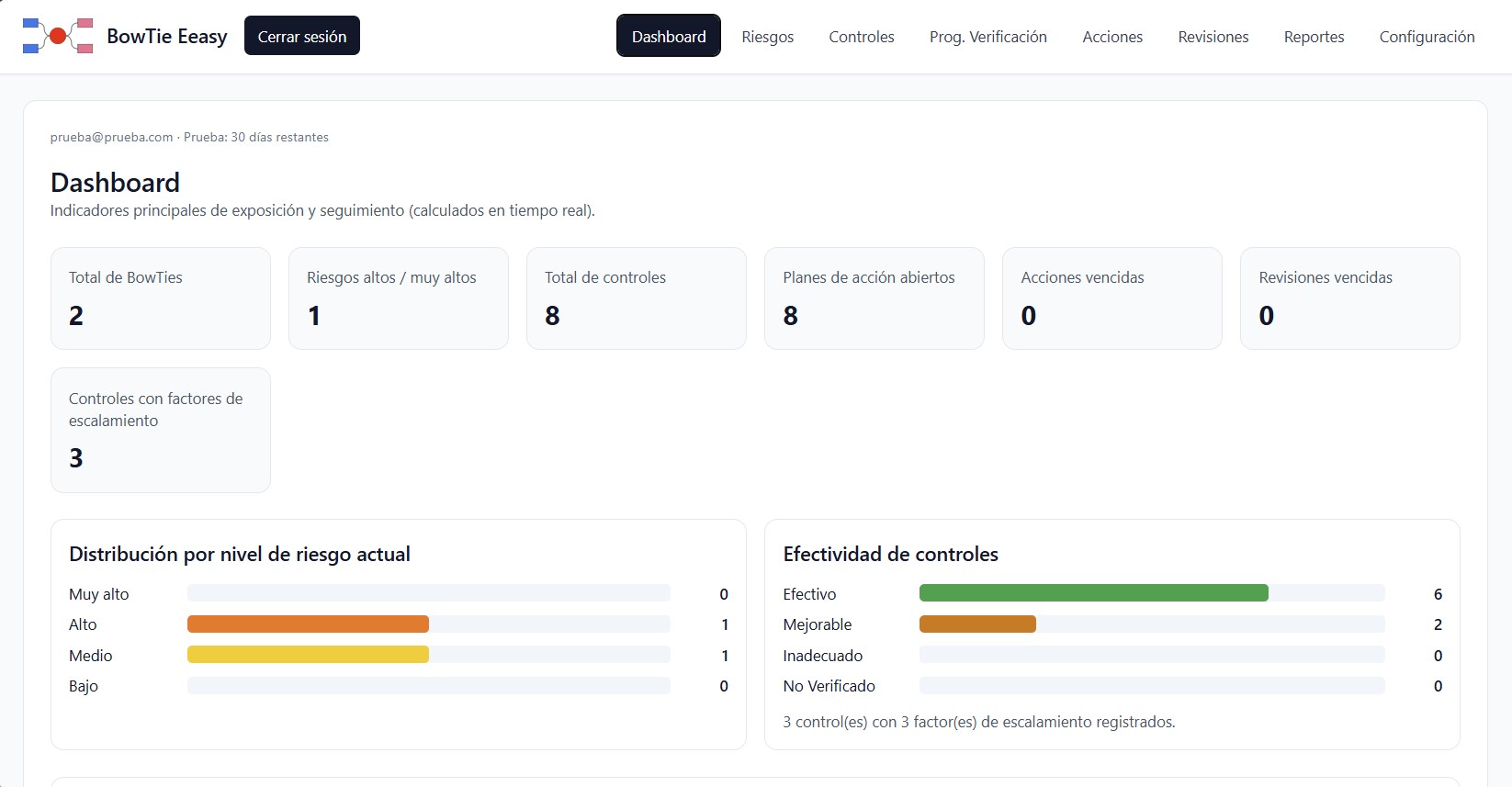
A single, living risk model running 100% in your browser
- ✓The diagram is the database: modifying any safeguard automatically updates its master register and technical datasheet in real time.
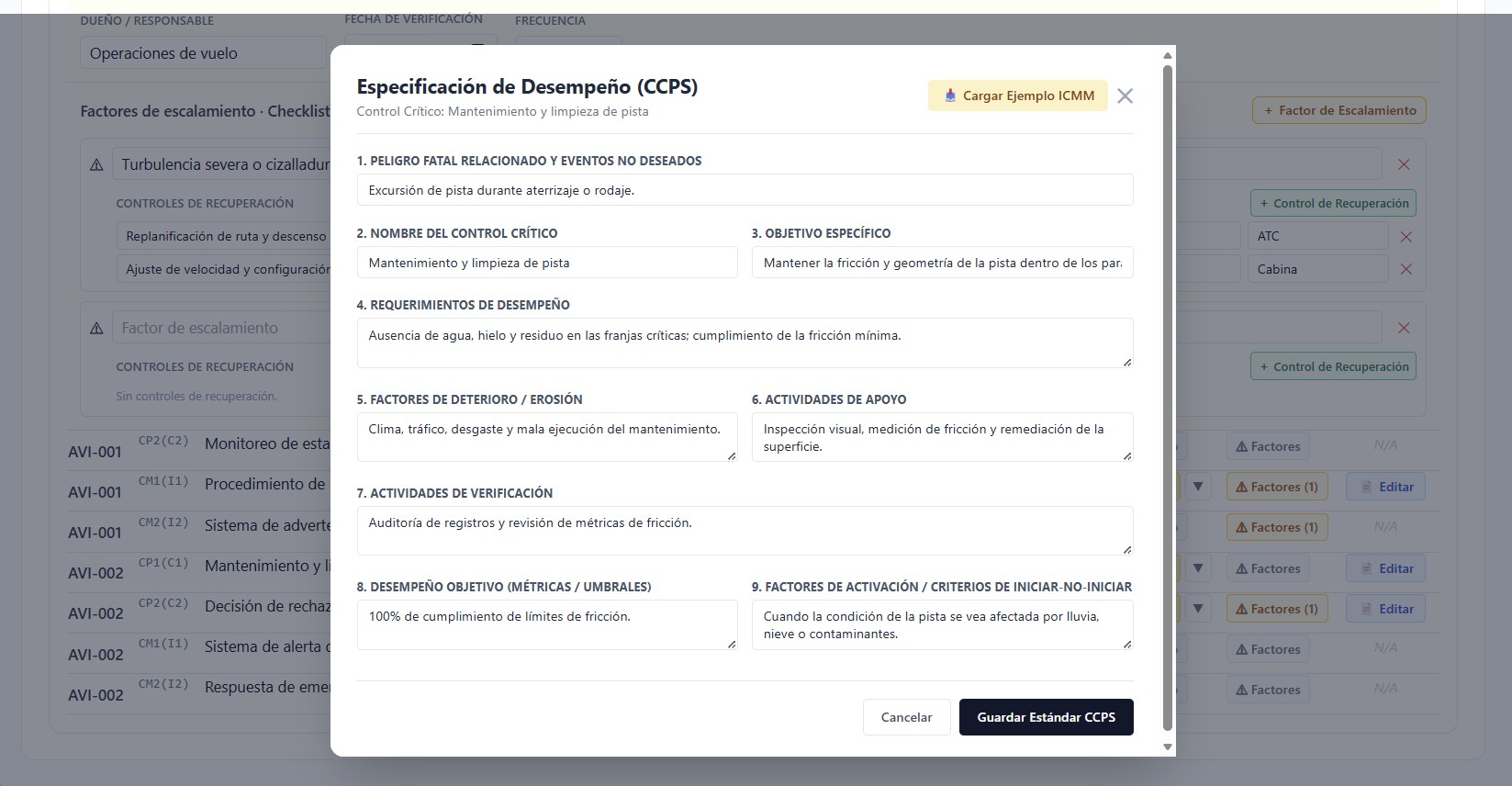
- ✓Critical control specifications structured per CCPS / LOPA and ICMM standards, with verified independence (IPL) and performance targets.
- ✓Integrated Critical Control Verification (CCV) schedule tracking the actual operational health of each safeguard.
- ✓Total data privacy and zero IT friction: runs client-side with zero network transmission and no cloud approval delays.
BowTie Methodology
BowTie Model Anatomy per CCPS / Energy Institute Standards
The BowTie model connects Fault Tree Analysis (proactive cause side) with Event Tree Analysis (reactive consequence side), converging at the Top Event as the loss of containment or loss of physical control over the hazard.
Technical BowTie Model: Hydrocarbon Pipeline Transport
CCPS / Energy Institute (2018) Structure + ICMM Critical Control Management
Loss of Primary Containment (LOPC) in pipeline
The point in time when control over the hazard is lost, releasing its potential to cause harm.
"The point in time when control over the hazard is lost, releasing its potential to cause harm."
CCPS / Energy Institute (2018), Cap. 2.3
Model anatomy according to CCPS / Energy Institute (2018):
- Hazard
- An operation, activity, or material with intrinsic potential to cause harm (e.g., high-pressure flammable hydrocarbons, haul truck on haul road, tailings storage facility). It defines the operational scope of the analysis.
- Top Event
- The point in time when physical control or containment over the hazard is lost (e.g., loss of primary containment - LOPC, aircraft runway excursion, dam breach). It is not the ultimate damage, but the onset of the unwanted release.
- Threats
- Operational or external initiating causes that, on their own and in the absence of barriers, are sufficient to lead directly to the Top Event.
- Prevention Barriers
- Safeguards placed on the left-hand side of the Top Event. Must possess the demonstrated capability on their own to completely terminate the threat pathway before loss of containment occurs.
- Mitigation Barriers
- Safeguards placed on the right-hand side of the Top Event. Activated post-release to contain, disperse, or reduce the severity of the consequence.
- Consequences
- Harm or damage resulting from the Top Event to people, assets, environment, or reputation. Formulated strictly as [physical damage] due to [specific event] (e.g., multiple fatalities due to jet fire).
- Escalation Factors (Degradation)
- A condition or circumstance that compromises or defeats the effectiveness of a primary barrier (termed Erosion Factor in ICMM). Requires secondary Degradation Controls to preserve integrity.
- Degradation Control
- A secondary safeguard designed specifically to prevent or mitigate the impact of an escalation factor upon a primary barrier.
LOPA Evaluation
Independent Protection Layer (IPL) Validity Criteria
We adhere to the Layers of Protection Analysis (LOPA) framework defined by the Center for Chemical Process Safety (CCPS). For a safeguard to qualify as an active barrier in BowTie Easy, it must fulfill three auditable criteria:
Independence
The barrier functions autonomously with no common-cause failure mechanisms (power sources, process sensors, or initiating events) shared with other safeguards on the same pathway.
Effectiveness
The safeguard has proven physical and operational capacity to terminate 100% of the threat sequence or mitigate consequence severity. Detection without an automated final control element does not constitute an IPL.
Auditability
Backed by a documented performance standard with periodic end-to-end testing: primary sensor, logic solver, and final actuation element validated in the field.
Aligned with ICMM Critical Control Management (CCM) guidance, Global Industry Standard on Tailings Management (GISTM), ISO 31000, and BARS / ICAO aviation standards. View ICMM Good Practice Guidance (PDF)
Core Capabilities
From Risk Workshop Modeling to In-Field Verification
Every BowTie Easy feature satisfies an essential requirement of the process safety and critical control management lifecycle.
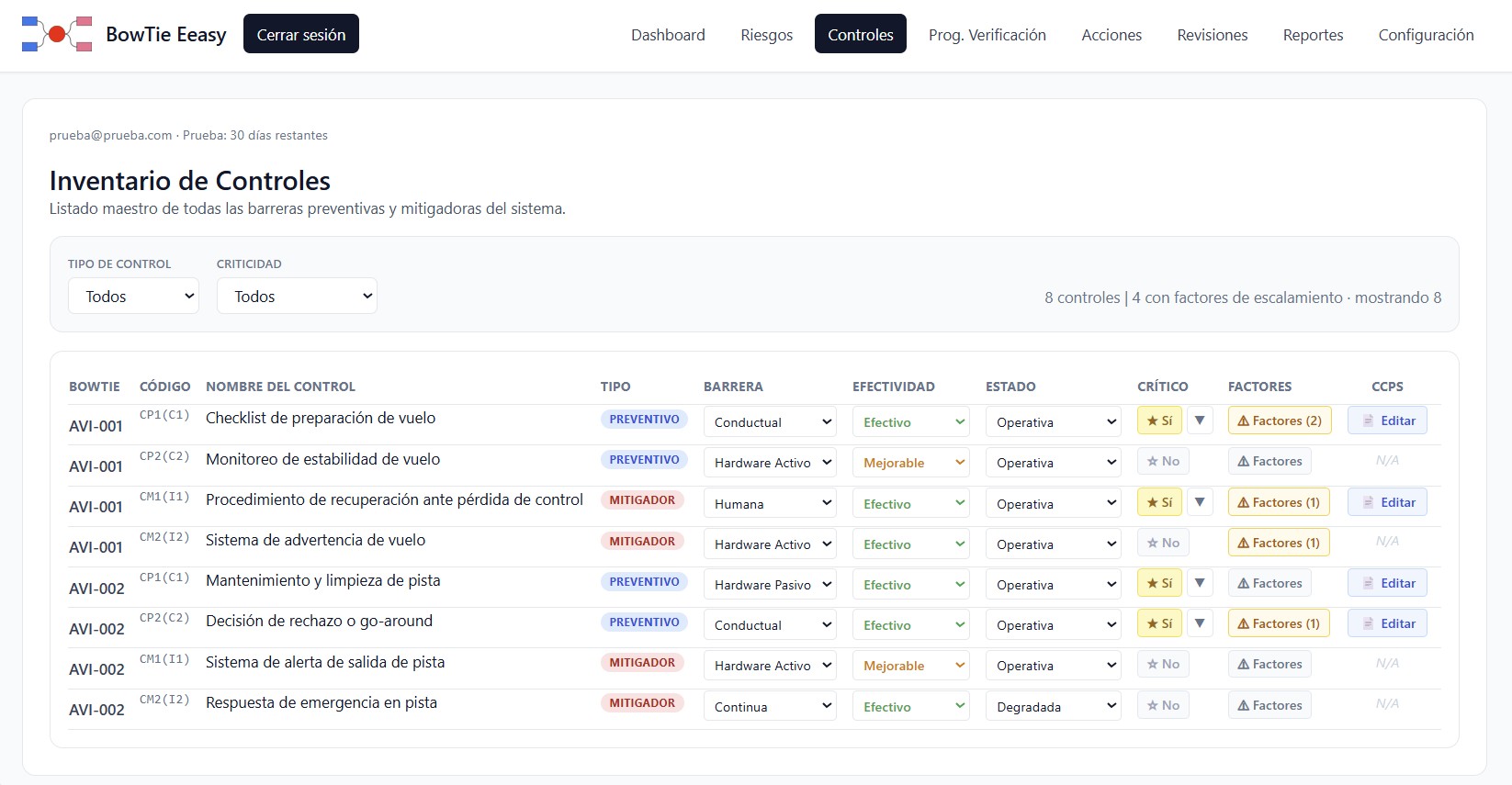
Master Safeguard & Critical Control Register
Filter all facility safeguards by type, barrier category, or criticality from a single auditable interface. Modifying a critical control immediately updates all linked BowTie instances across the facility.
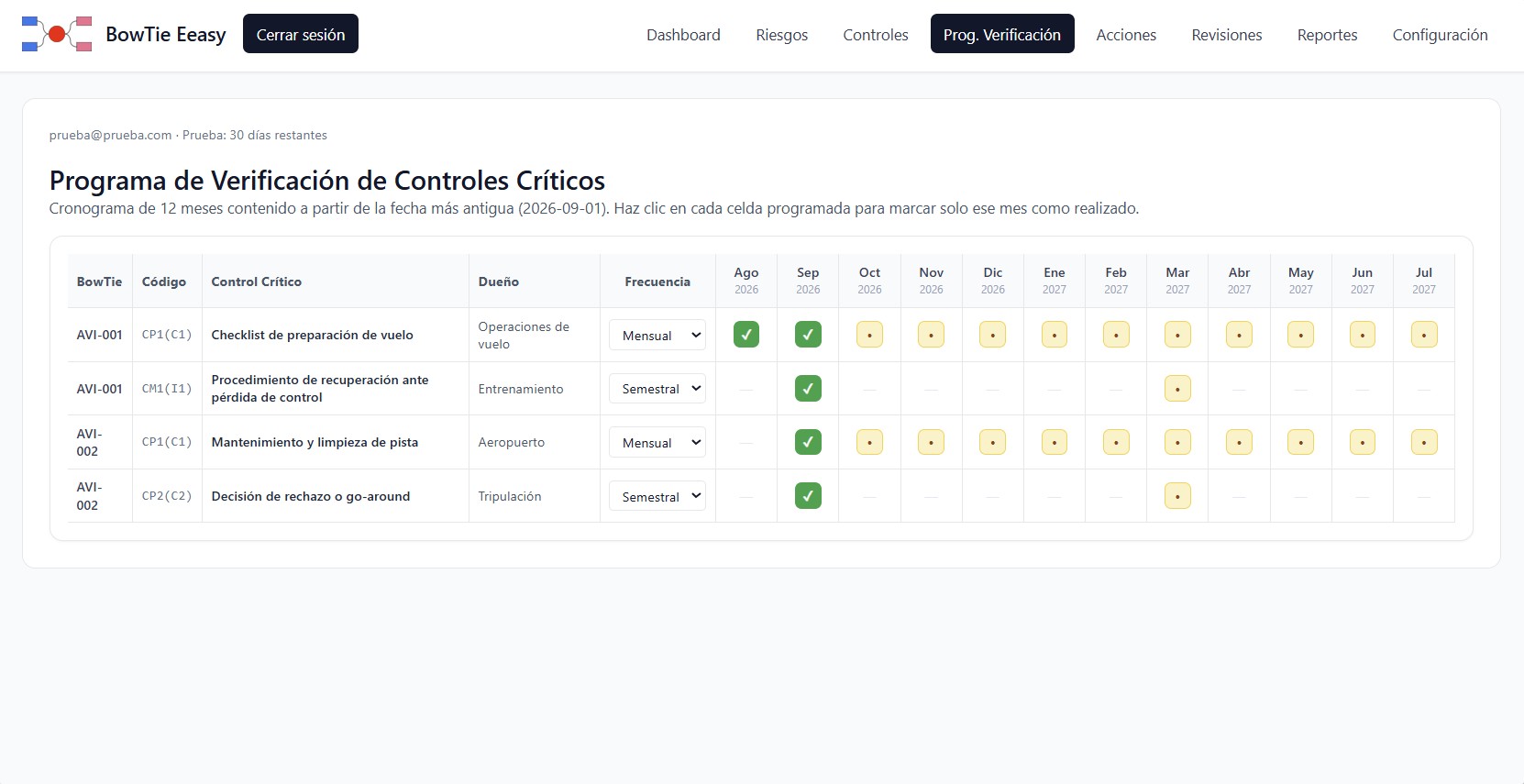
Critical Control Verification (CCV) Schedule
The system automatically structures the periodic inspection calendar based on test frequencies and expiration dates for each safeguard, preventing uncontrolled barrier degradation.
- Interactive Major Hazard Canvas
- Structured visual mapping of initiating threats, safeguards, and consequences on a responsive vector canvas.
- Barrier Effectiveness Assessment
- Objective safeguard performance classification with automated inherent and residual risk calculations.
- LOPA Critical Control Datasheets
- Comprehensive technical documentation: Detect-Decide-Act sequence, control owner, and performance standards.
- Escalation Factors & Degradation Controls
- Explicit barrier vulnerability modeling with secondary safeguards linked directly to failure mechanisms.
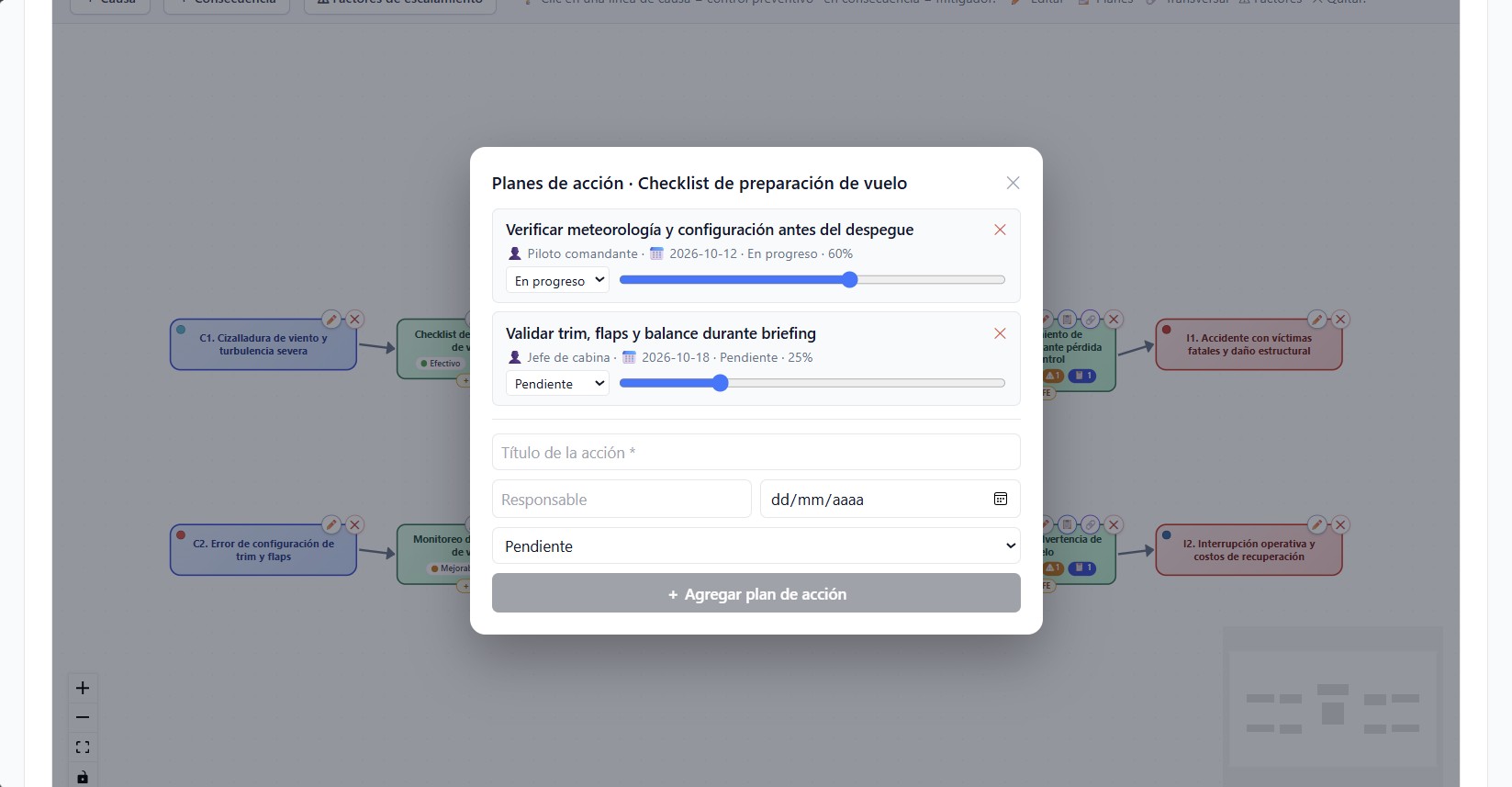
- Corrective Action Plan Tracking
- Immediate action plan generation whenever a barrier exhibits field degradation or operational failure.
- Engineering Reports & Data Export
- Export executive PDF dossiers and Excel spreadsheets ready for management committees and regulatory audits.
- Projected Risk Modeling
- Forecast residual risk levels following completion of corrective action plans to support CAPEX/OPEX justifications.
- Formal Review Lifecycle Tracking
- Audit trail and scheduled review checkpoints to prevent risk analyses from drifting out of date as operations change.
Client-Side Architecture
100% Local Execution. Zero Risk Data Transmitted to the Cloud.
BowTie Easy processes all logic inside the user browser: major accident hazard datasets are never uploaded to third-party databases. Requires zero server infrastructure and eliminates third-party vendor IT security assessments.
- No Middle Server
- Evaluation logic runs inside your browser runtime. Facility risk data is stored locally in client-side storage under your full control.
- Compliance & Confidentiality
- Major hazard data remains strictly subject to your internal cybersecurity policies. No cross-border data transfer occurs.
- Immediate Deployment
- No server provisioning or corporate IT integration delays. A risk engineer can begin operational modeling immediately.
Sector Benchmarks
Industry-Specific Reference Models
Preloaded models populated with validated industry terminology and regulatory standards for rapid adoption.
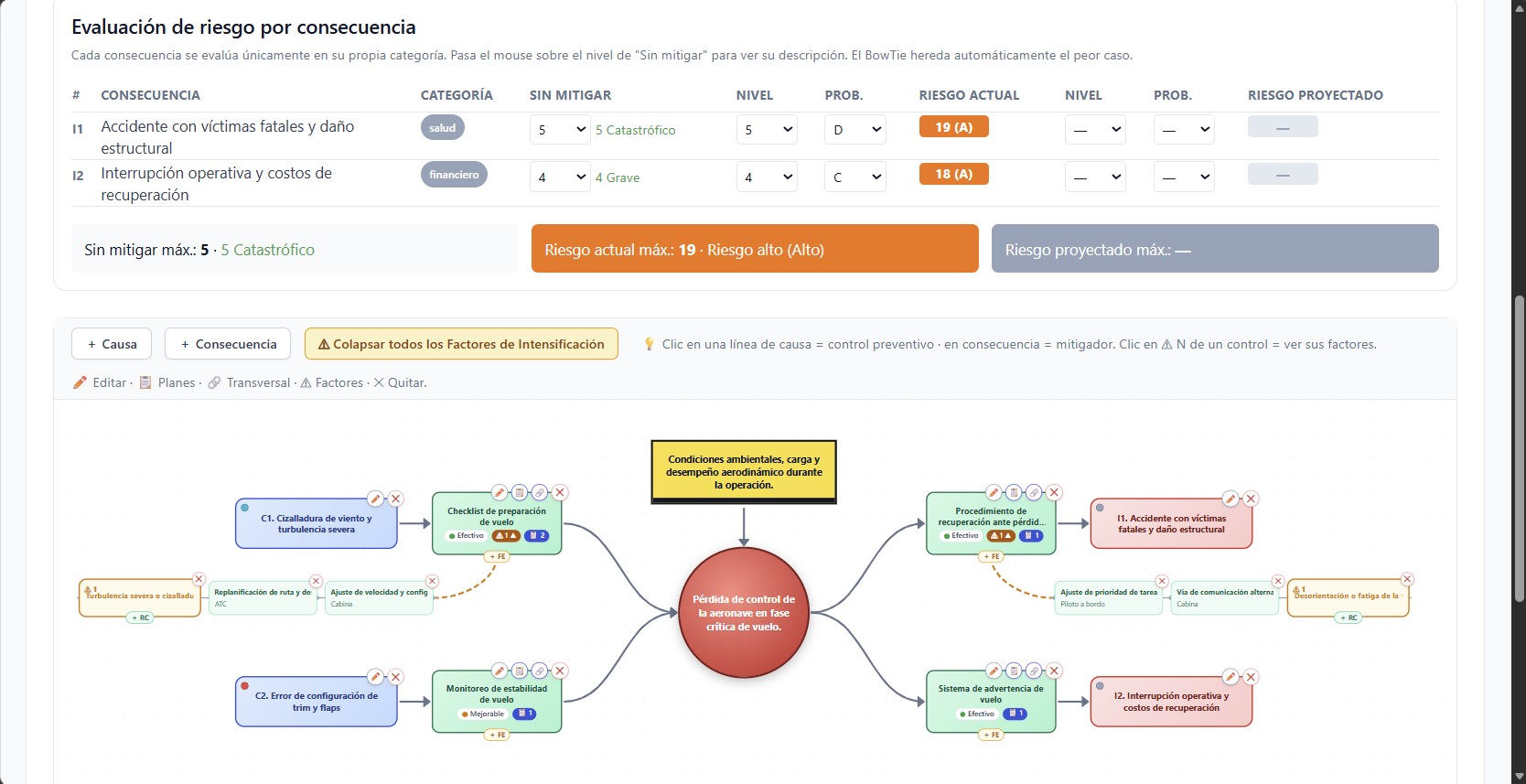
Commercial Aviation & Flight Operations
Loss of Control In-Flight (LOC-I) and Runway Excursion (RE)
Barrier hierarchy aligned with ICAO Safety Management Systems (SMS) and Basic Aviation Risk Standards (BARS).
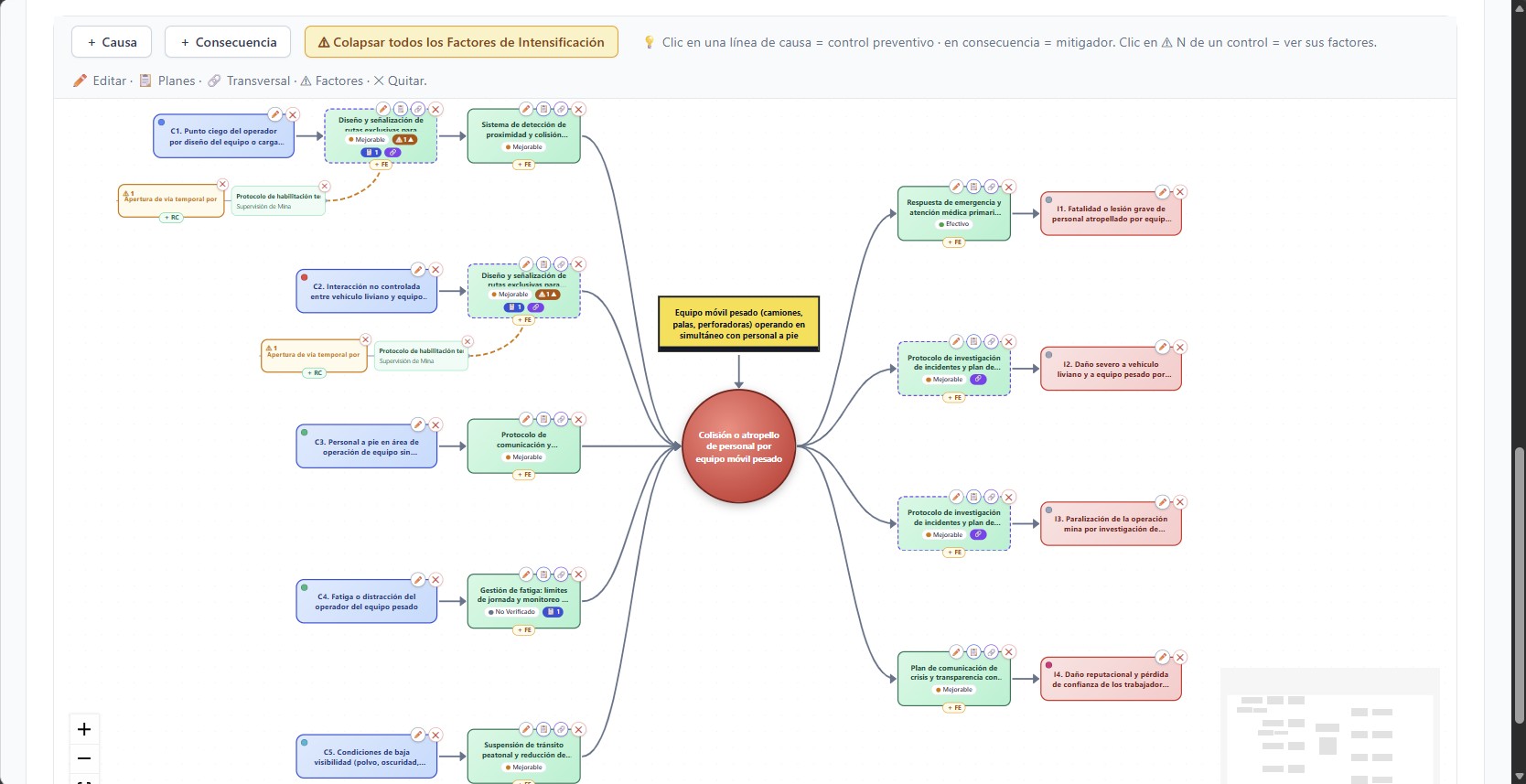
Open Pit & Underground Mining
Slope instability, heavy mobile equipment collision, and premature blast detonation
Critical control specifications adhering to ICMM Critical Control Management guidelines and mining health and safety standards.
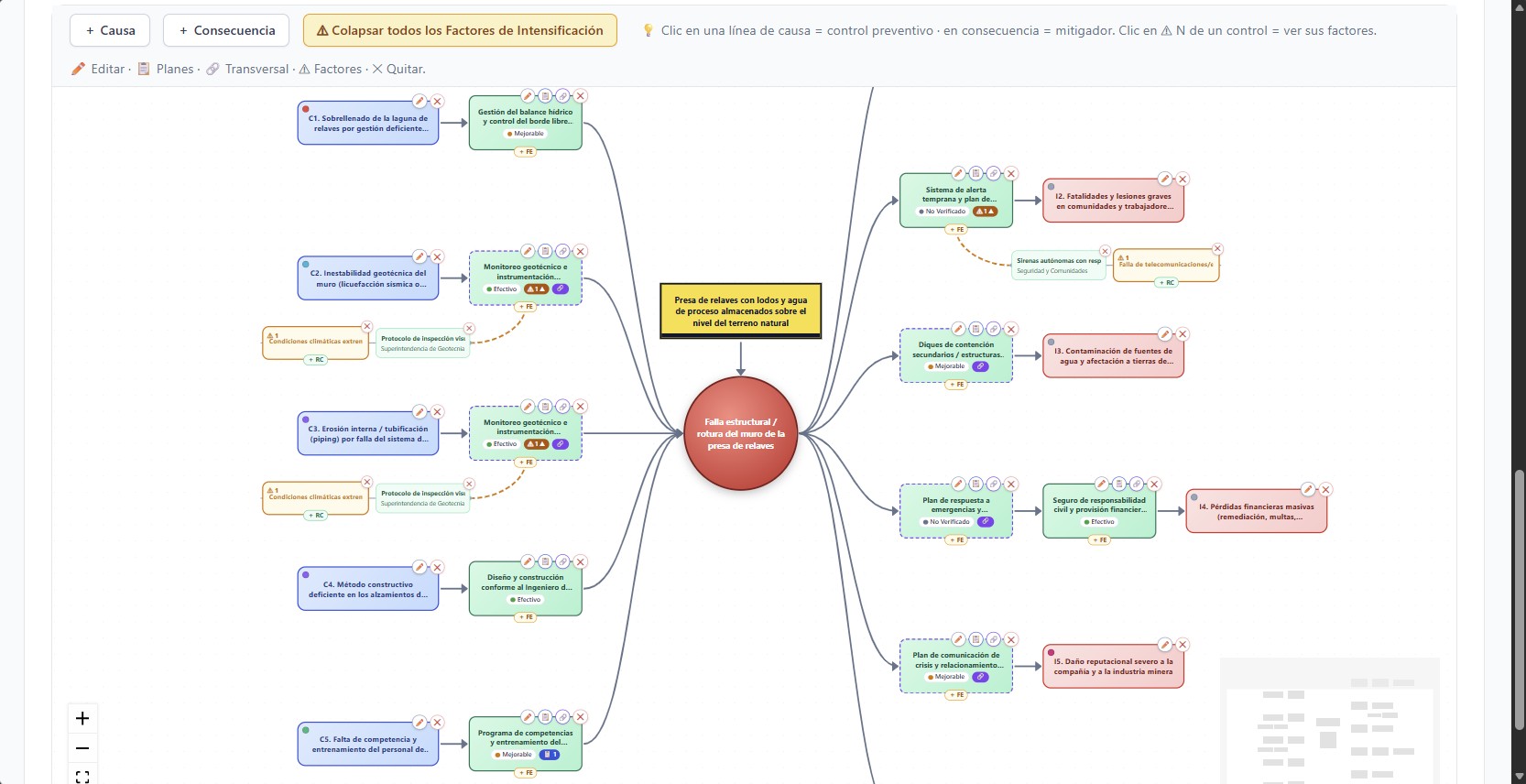
Tailings Storage Facilities (TSF)
Loss of containment due to overtopping, slope instability, or piping failure
Prevention and mitigation safeguards aligned with the Global Industry Standard on Tailings Management (GISTM).
Professional Subscription
Transparent, Direct Pricing
Complete access to risk modeling, master control registers, and report generation. Zero per-diagram fees.
BowTie Easy Professional
Comprehensive license for risk engineers, process safety specialists, and HSE managers.
Plus applicable local taxes. Corporate invoicing available.
- Unlimited vector BowTie diagrams
- LOPA-grounded critical control datasheets (CCPS)
- Linked escalation factors and degradation controls
- Centralized safeguard inventory and CCV audit schedule
- Configurable PAER risk matrix and severity thresholds
- Executive PDF and Excel spreadsheet exports
- Preloaded Mining, Tailings, and Aviation benchmark models
- Private local client-side storage (zero risk data in external cloud)
- Direct technical support via email and WhatsApp
30-day technical trial with all capabilities unlocked. Immediate start with no credit card required.
30-DAY TECHNICAL PILOT TRIAL
Verify your critical safeguards with auditable engineering evidence
Initiate your 30-day trial locally and evaluate the methodology with your actual operational facility scenarios.